
Everything You Need to Know About Phantom Blade Zero
Phantom Blade Zero has been near the top of every action fan’s watchlist since it first showed up in 2023, and it finally arrives on

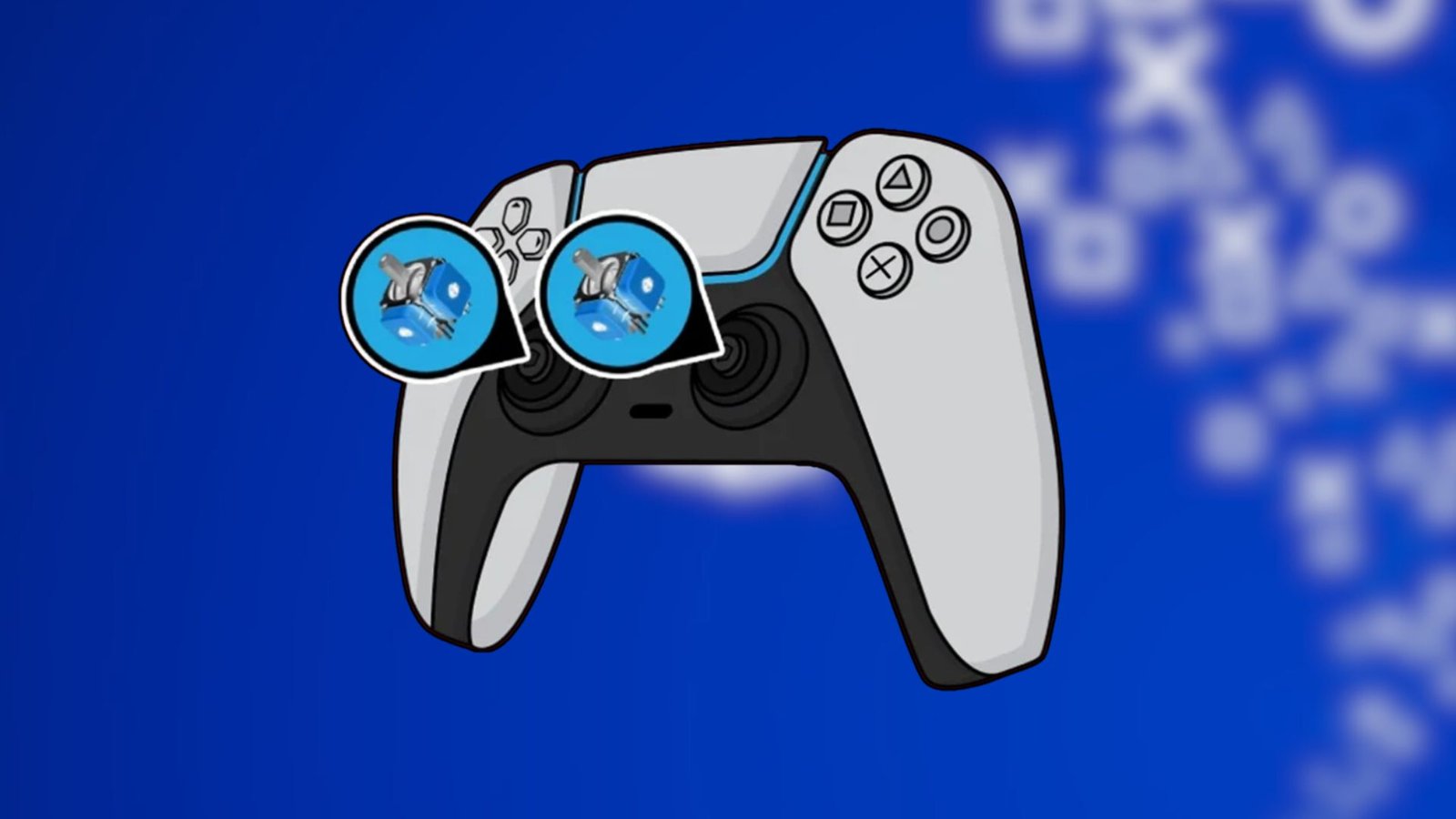
“Hall Effect vs TMR” is a common debate, as these two analogues have become the two leading magnetic-sensor systems in custom and high-end controllers. Both promise to fix the classic problems of wear and stick drift that plague older potentiometer-based sticks. But they aren’t the same. Each brings its own flavour: different sensing style, different strengths, and different trade-offs.
At The Controller People, we’ve swapped standard sticks for magnetic ones for years. Most recently, the question we’ve been getting the most has been: “Should I go Hall Effect or TMR?” It’s a fair question. They’re close siblings, but after testing both types across dozens of controllers, we’ve seen what separates one from the other first hand.
Here’s our take on the Hall Effect vs TMR analogue stick debate.
Hall Effect sticks improved controller reliability when they first became mainstream. Instead of relying on physical resistance, they use a magnet and a Hall sensor to read stick position. That change means there’s no physical contact inside the sensor, which drastically reduces wear and stick-drift problems.
Here’s what feels different when you play with Hall Effect:
In short: if you’ve dealt with stick drift before or you want a dependable stick that stays stable under heavy use, Hall Effect is a solid, proven upgrade. It’s likely the first step many players take when moving beyond stock controllers, because it solves one of the biggest pain points while keeping costs relatively reasonable.
TMR (Tunnel Magnetoresistance) is the next evolution in magnetic stick technology. It uses a more sensitive magnetic-resistance sensor that reacts to changes in magnetic fields rather than distance or voltage changes alone. That difference might sound subtle, but it changes how the controller feels under intense use.
Here’s where TMR tends to outperform Hall Effect:
Importantly, compared side-by-side, TMR noticeably feels smoother, steadier, and reduces fatigue over long sessions. TMR feels like the version of analogue sticks more in line with modern competitive demands.

Here’s where things get practical. Choosing between Hall Effect and TMR is about your habits, priorities, and how you play.
Both Hall Effect and TMR resist friction-based degradation. Both stay stable far longer than potentiometer sticks. But TMR tends to keep its calibration tighter over time, meaning it needs fewer mid-season tweaks or readjustments. For players who log many hours weekly or who treat their controller as a long-term tool, that consistency adds up.
In fast-paced shooters, the difference between first-shot and second-shot can be a stick’s microswitch away. TMR’s higher resolution and faster magnetic response mean it picks up smaller movements more reliably. That gives better control during recoil, improves tracking at range, and helps with micro-corrections in chaotic fights.
If you play wired, power use doesn’t matter. If you play wireless, it absolutely does. Hall Effect sticks draw more power than TMR. That means shorter battery life or more frequent recharges. Especially when using vibration or haptics, or during long sessions, TMR’s efficiency provides a real comfort advantage.
Hall-effect modules and controllers are more widely available right now. TMR is growing, but is still less common. That can make them more expensive or more challenging to find, depending on the region. For someone experimenting or on a budget, Hall Effect represents a strong middle ground. For those who want the newest tech and are okay with potential premium cost, TMR makes sense.
Hall Effect sensors seldom need maintenance compared to potentiometer sticks, but they can sometimes require calibration tweaks depending on temperature or controller age. TMR’s magnetic sensing is more stable, making it feel like a “fit once, forget it” solution. For players who like a plug-and-play kind of feel and don’t want to check their deadzones constantly, TMR wins by a long shot.
Yes, TMR controller sticks are infinitely better compared to Hall Effect, but they’re not always the best choices.
There are instances in the Hall Effect vs TMR discussion where the former wins, for example:
If your answer is “yes” to all these considerations, then by all means, go for a Hall Effect upgrade for your custom PS5 controller.
On the other hand, you should choose TMR if you care about precision, consistency, and long-term stability:
If you’re serious about competitive play and want to remove input inconsistency entirely, TMR is the clearer long-term investment.
With magnetic sensors like Hall Effect and TMR available to anyone willing to open a controller or buy a premium build, the baseline for “good” has changed.
What this means for you depends on how you play:
Unlike the rest of the tech industry, controller technology doesn’t evolve as quickly. For years, Hall Effect was the king. But right now, TMR is better. It doesn’t come cheap or everywhere. However, for players who demand the best, TMR is worth the money.
Of course, at the end of the day, what matters most is where you get your controller analog stick upgrades.
Here at The Controller People, we offer a 12-month warranty for Hall Effect and TMR analog stick upgrades for our custom PS5 controllers. Each also comes with a 14-day money-back guarantee. This gives you the peace of mind knowing that your new PS5 controller was built with longevity, build quality, and your satisfaction in mind.

Phantom Blade Zero has been near the top of every action fan’s watchlist since it first showed up in 2023, and it finally arrives on

On August 27, the GTA 6 Extended Look premieres on Netflix. It is the first time Rockstar Games has handed a piece of Grand Theft
If you want the best PS5 controller in 2026, you have three options. The first is the standard DualSense at £64.99 (or a limited edition

Assassin’s Creed IV: Black Flag is one of those rare games that people who do not even like Assassin’s Creed still love, even on today’s
1 Comment
I am confident that Hall Effect tends to be the all around best for most people and price wise is basically inline with standard stuff. I have a feeling that TMR probably don’t offer a large enough advantage to most gamers for it to be worth it, especially if price of controller noticeably increases because of it. another way to put it… if hall effect is a solid upgrade over the traditional analog sticks, then it should ‘easily’ last years without any obvious issues even with regular use.
“TMR controller sticks are infinitely better compared to Hall Effect” ; I have my doubts about that in the real world. technically ‘better’, fine. but in real world ill bet it’s not much for most people as ‘infinitely better’ implies a rather large upgrade and I doubt it is for most people as a analog stick is still a analog stick at the end of the day and can’t compete with mouse level accuracy.
even from a power consumption aspect… unless there is a obvious difference, I suspect in the real world it’s not going to add much time to the overall playtime. like for example say a hall effect controller got 20hrs on a charge. even if TMR increases it, if it’s not that much, then it’s not really going to make a worthwhile difference. but say hall effect was 10 hrs and TMR was 20hrs on same capacity of battery, then at that point might be a worthwhile difference.
even from a precision standpoint… if to legitimately notice the difference of TMR over Hall Effect requires a pro-level player or thereabouts, then for the vast majority of us there is no practical difference. hell, even assuming there actually is some legit difference among a pro-level player, I have my doubts about it being all that much in a typical match. like if they only ‘might’ get another extra kill or two once in a while (like one using TMR vs Hall Effect), then it’s pretty much nothing.
or another way to put it… say it was a one on one match of two pro levels of roughly equal skill on same basic controller design with only the sticks being all that’s changed. so one has TMR and the other standard Hall Effect sticks and they play to say first to 100 kills. lets say for sake of argument that the TMR comes out ahead, now I would like to see a reverse of that with the person who won with TMR now uses the Hall Effect and the loser uses the TMR and play to another 100 kills to see if there is any rough consistency here, especially if there is any significant difference (i.e. say roughly 60-70 (or lower) vs 100 kills) and it’s not fairly close (i.e. roughly 80-90 vs 100). plus, there will always be random variables where the players could be a bit more on or off their game that day etc (so even if the TMR won by 10-20 kills, it’s always possible it’s more of the player being off their game a bit than type of analog stick at that point). so that’s sort of why I would like to see them do that one on one of roughly same general skill over say 10-20 one on one matches to 100 to see if there is any clear pattern of the TMR coming out ahead (assuming it even does) or not, or whether it’s in that more debatable range. because unless there is some more clear cut differences that can’t be questioned, I suspect in the real world ‘TMR vs Hall Effect’ on any random controllers are going to be too close to really matter all-around. hell, even a traditional analog stick probably won’t do bad here as I think the core thing is controller longevity (so no stick drift) more than anything else, at least to most people.
at the end of the day I would not be surprised if some people obsess over TMR because on paper it’s ‘better’ more than there being a difference most people could notice (not just slightly either). because some people are always obsessed with chasing better and better stuff when after a certain point it’s not really necessary. because like I was saying, it’s still a analog stick at the end of the day. so as long it’s accurate enough so people in general don’t complain, and controller lasts a long time, then that’s pretty much the bottom line.